Why Food Noise Is Keeping You Stuck with Lindsay Martens
Jun 17, 2025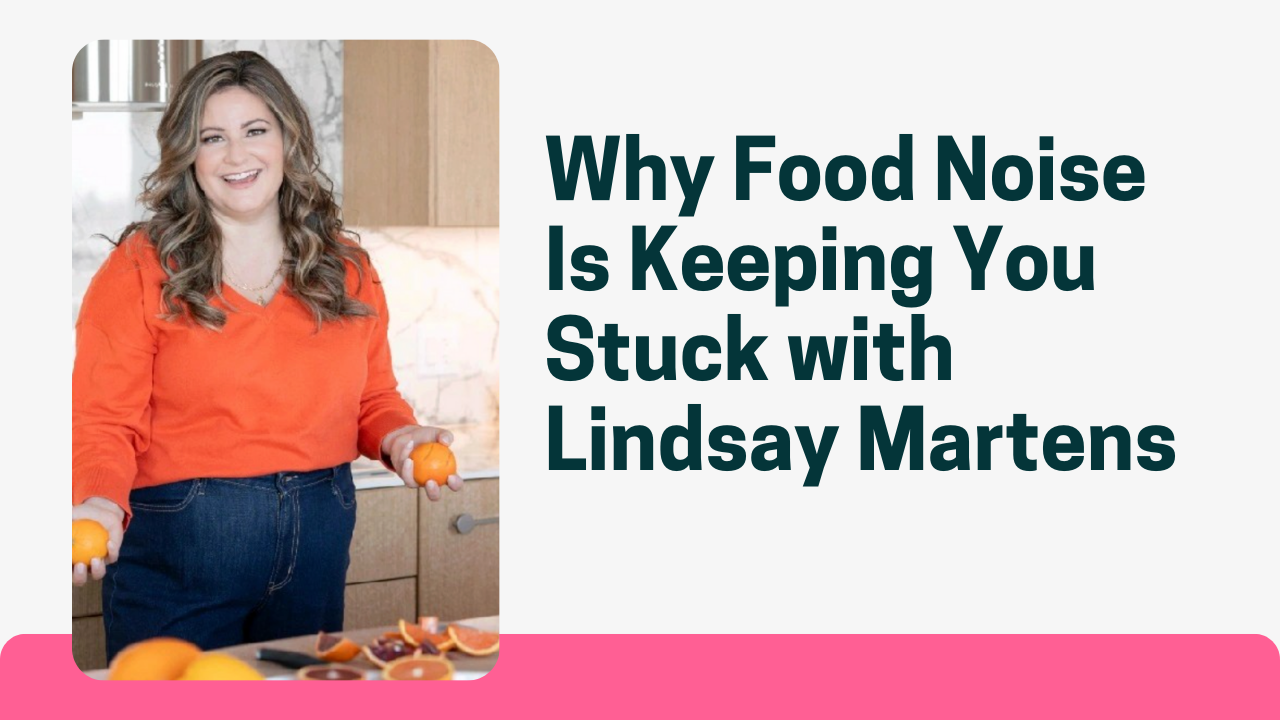
What “Food Noise” Really Is — And Why It’s Not About Willpower (with Dietitian Lindsay Martins)
If you've ever stood in your kitchen at 9pm wondering whether you’re actually hungry or just… tired, overwhelmed, or finally alone for the first time all day — you’re not alone.
And if you've ever wondered why you can scroll past one wellness video and suddenly your entire Instagram feed becomes an infomercial for protein hacks, water fasts, and 17-year-olds blending steak into matcha — you’re definitely not alone.
Today’s blog post is about something that affects so many of us — especially women in their 30s, 40s, and 50s — and honestly? It’s liberating.
It’s called food noise, and once you understand it, you’ll never look at cravings, guilt, or “should I eat this?” the same way again.
This conversation comes from my episode with Registered Dietitian Lindsay Martins, who describes herself as the compassionate disruptor of women’s health: a warm hug wrapped in science, sanity, and common sense.
Let’s get into it.
What Is Food Noise (Really)?
Food noise is not about willpower.
It’s not about discipline.
And it’s definitely not about whether you’re capable of “sticking to the plan.”
According to Lindsay M., food noise is the mental and emotional chatter about food — the kind that follows you around all day:
✔ cravings that don’t seem to make sense
✔ guilt after eating
✔ thinking about what you “should” or “shouldn’t” eat
✔ obsessing about calories or protein
✔ eating when what you really need is rest, connection, or relief
It’s not about food.
It’s about everything else you’re carrying.
And for women? That load is usually very, very heavy.
Why Wellness Culture Makes Food Noise Louder
Remember when the biggest influence on your body image was a Seventeen magazine cover?
Oh, how simple life was.
Now, one little click on a workout reel and suddenly your entire For You Page is telling you:
-
Don’t eat before noon.
-
Only eat cottage cheese.
-
Carrots are bad now.
-
Drink this. Don’t eat that. Burn this off. Try these supplements.
It’s nonstop.
And here's where Lindsay M. dropped a truth bomb:
Everyone eats — which means everyone thinks they’re an expert.
But experience ≠ expertise.
What worked for one 22-year-old influencer with no credentials is not the gold standard for your 43-year-old life with kids, a business, and three appointments to get to before noon.
The constant mixed messages create… you guessed it:
MORE food noise.
Let’s Talk About Cottage Cheese (Because Apparently Everyone Is??)
We had to go there.
Cottage cheese is having a moment — cottage cheese bread, cottage cheese ice cream, cottage cheese everything.
But in Lindsay’s words:
There is no single magical food.
You don’t have to eat cottage cheese.
You don’t have to eat kale.
You don’t have to eat anything you don’t like.
Can you hear the angels singing?
There is always another way to get the nutrients you need. And if you only like three vegetables? Congrats — eat those three. You’re doing great.
This is the kind of sanity we need on the Internet.
The “After the Kids Go to Bed” Snack: Comfort or Hunger?
One of the most common food noise triggers?
The evening snack ritual.
You know the one:
The house is finally quiet.
You’re finally alone.
And suddenly you want… something.
That “comfort craver” pattern (which is the most common result of Lindsay M.’s quiz) isn’t always about the food itself.
It’s often about:
-
finally exhaling
-
finally having yourself to yourself
-
finally experiencing pleasure or satisfaction after a long day
Food becomes the acceptable, socially normal way to get that relief — especially in a culture where rest isn’t always seen as “productive.”
But here’s the good news:
Once you understand what the evening snack represents, you can meet that need in new ways.
Before-and-After Photos? You Don’t Owe the Internet Anything
One of my favourite moments in this episode was Lindsay’s take on transformation culture.
She said:
“There is no before and after. There’s only during.”
Mic. Drop.
We’re taught to applaud dramatic changes — often without understanding what caused them, whether they’re healthy, or whether they’re even sustainable.
But focusing on before-and-after culture almost always leads to:
-
shame
-
comparison
-
negative self-talk
-
feeling like you’re “failing”
And none of those things — zero — improve your health long term.
In fact, research shows they make things worse.
Why Regulated Dietitians Matter (and Why It’s Not the Same as “Nutritionist”)
One important clarification:
Dietitians are regulated health professionals.
Nutritionist is not a protected title.
A dietitian must:
-
complete a degree
-
complete a clinical internship
-
stay current with evidence and continuing education
-
follow strict professional standards
This is the difference between advice based on science and advice based on “well this worked for me once.”
QUIZ: What’s YOUR Biggest Food Noise Trigger?
Lindsay has an incredible quiz called Quiet the Food Noise, which helps you identify your loudest food noise pattern — comfort, stress, restriction, or something else — and gives you personalized support via email.
And the best part?
You can retake it as your life changes and your triggers shift.
Find it here: lindseymartinsnutrition.com/quiz
Final Thoughts: What Happens When You Quiet Food Noise
Here’s the most powerful thing Lindsay said all episode:
When you quiet the food noise, you free up brain space.
Brain space for:
✨ creativity
✨ work you love
✨ relationships
✨ self-trust
✨ living your actual life
Not obsessing about protein grams, cottage cheese hacks, or whether you ate the “right” vegetable.
When food noise goes quiet, you get louder.