How to Turn In-Person Events into Marketing Gold
Oct 22, 2025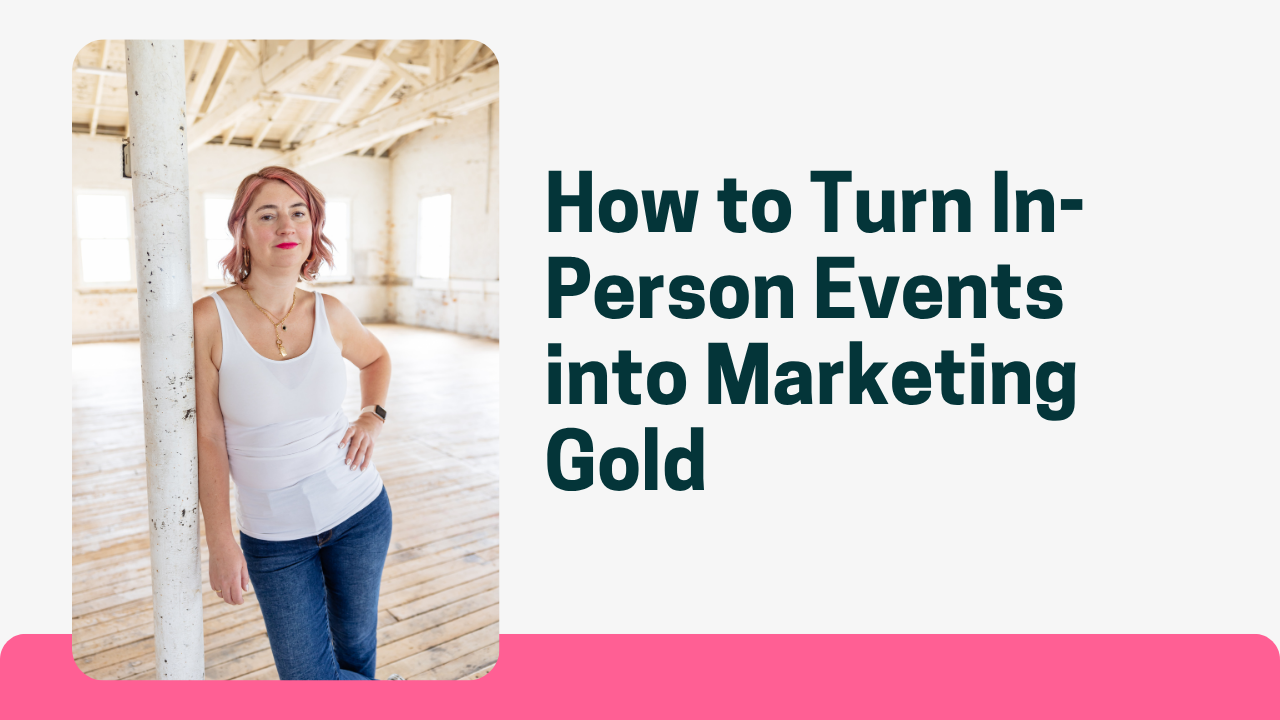
How to Turn In-Person Events Into Marketing Gold
If you think conferences and networking events are just about sitting in a chair and collecting business cards, you're leaving a lot of marketing value on the table.
In-person events — conferences, networking meetups, local business gatherings — are one of the most underused marketing tools for small business owners. They're not just about showing up. With a little intention and a simple game plan, a single event can generate new referral partnerships, content for your platforms, and connections that keep paying off long after the event wraps.
Here are four (and a half) ways to turn your next in-person event into a real part of your marketing strategy.
1. Go With a Clear Intention
Every event you attend should have a purpose — and "I should probably go" doesn't count.
Before you register, ask yourself: why am I going? Your intention might be to find referral partners in complementary industries, like a web designer who could send clients your way. It might be to find collaboration opportunities, like podcast guesting. Or it might be to absorb as much as possible from the speakers.
Whatever it is, pick one main intention and one bonus goal. For example, your main goal could be to meet three potential referral partners, and your bonus goal could be to pick up one actionable insight from a speaker. That kind of focus changes how you spend your time at the event — and makes sure you leave with something concrete.
2. Have a Conversation Game Plan
At most events, there's an intentional networking portion. You will be asked questions like "What do you do?" and "What kind of clients do you love working with?" If you don't have clear answers ready, those conversations can feel awkward fast.
Get your one-liner ready. Know how to describe what you do in one sentence. Know who your dream client is. If your messaging feels fuzzy, that's worth sorting out before you walk into a room full of potential connections.
And here's a tip borrowed from journalism: come prepared with questions for other people. Everyone loves talking about themselves. When you ask thoughtful questions, people remember you — and they usually return the favor by asking about your business, too. That's where real connection happens.
The other thing worth noting: ditch the "finding a client" energy. When you reframe networking as looking for connections and collaborations instead of hunting for sales, it works in your favor. People don't remember the person who pitched them. They remember the person who was genuinely curious about what they do. And when someone in their network needs what you offer? That's the person they'll refer.
3. Show Up as a Participant, Not Just an Attendee
It's absolutely fine to be an introvert at these events. You don't need to work the room like a seasoned politician. But here's a mindset shift worth making: the speakers and panelists are not on a pedestal. They're people, just like you. They've had struggles, just like you. You are on a level playing field with anyone on that stage.
If there's a Q&A portion, consider coming prepared with a question or two. Asking a question during a panel is a low-effort, high-visibility move — people will remember you as the person who asked that great question. It positions you as engaged and thoughtful without requiring you to network the entire room.
That said, honor your energy. If you want to be an absorber for the rest of the event, that's completely valid.
4. Follow Up (Without Being Weird About It)
The follow-up is where most people either drop the ball entirely or make it awkward. Here's the thing: your follow-up does not need to include a next action. It can simply be a personal note.
What not to do: send an automated, copy-paste DM ten seconds after someone walks away from you. That's impersonal and it shows.
What to do instead: send a short, personal message that references something specific from your conversation. Maybe you talked about a shared frustration with a particular software. Maybe you complimented their style. Whatever it was, reference it. Make the follow-up feel like a continuation of a real conversation, not a funnel.
And keep the relationship going over time. If you see an article, a meme, or a resource that reminds you of someone you met, send it to them. That kind of genuine, no-strings-attached touchpoint is how professional relationships actually grow.
4.5 Give Yourself Time to Decompress
If you're someone who puts on their extrovert hat for events but needs quiet time afterward, schedule that recovery time intentionally. These events involve a lot of "peopling," and you'll process the experience better if you give yourself a day or two to decompress.
This is also a great time to turn the event into content. Share your takeaways on social media. Record a podcast episode about what you learned. Post a story about something that stood out. The event doesn't end when you leave the venue — it becomes fuel for your content calendar if you let it.
One More Thing: Your Brand Shows Up With You
Here's a detail that's easy to overlook: your visual brand is doing marketing work at these events whether you realize it or not. If everything you carry — your phone case, water bottle, notebook — happens to be in your brand colors, people notice. It becomes a memory anchor. They might not remember your business name right away, but they'll remember "the woman with all the hot pink everything." That recognition is branding at work.
The Bottom Line
In-person events don't have to be a drain on your time and energy. With a clear intention, a simple conversation plan, a willingness to participate, and a genuine follow-up, a single event can become one of the most effective pieces of your marketing strategy.
The secret? Be curious. Ask questions. And treat every conversation like a connection, not a conversion.