Forget Perfection: Sustainable Living With Sarah Robertson-Barnes
Jul 01, 2025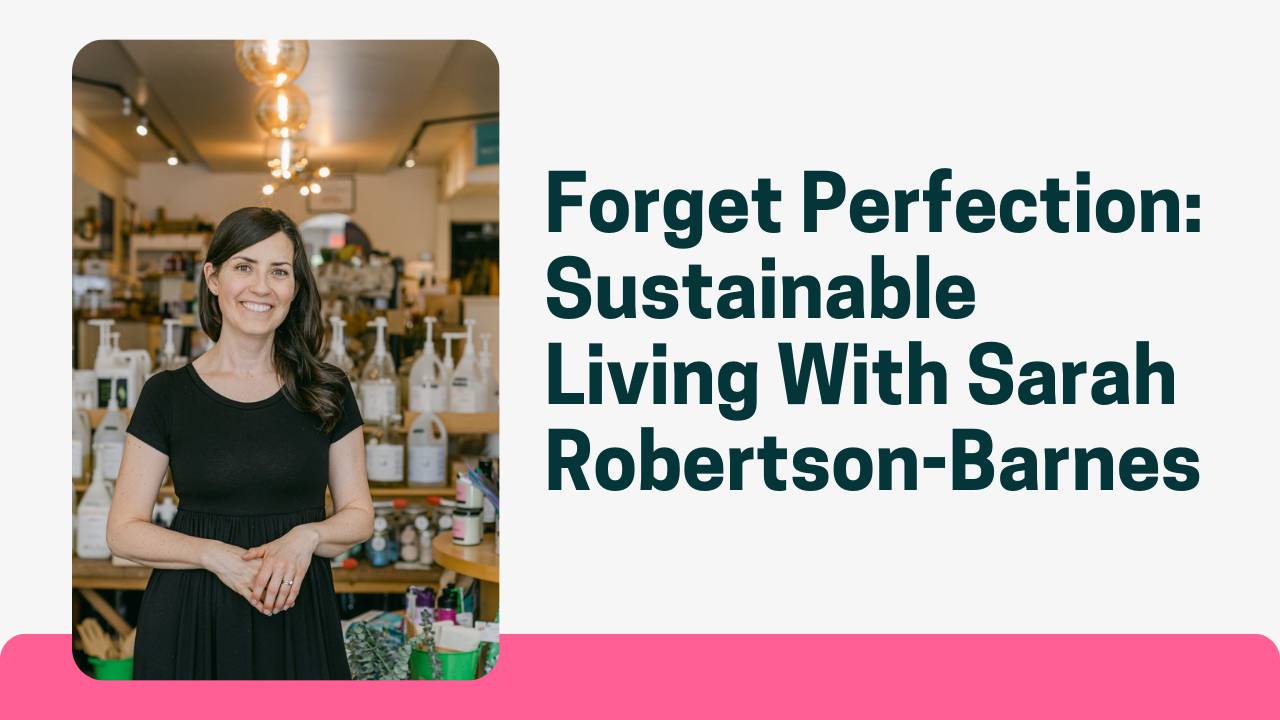
How to Live More Sustainably Without Burning Out According to Sarah Robertson Barnes
If you have ever thought living a more sustainable lifestyle meant buying an electric car, sewing your own clothes, and somehow fitting an entire year of trash into a Mason jar, you are not alone. Most people assume sustainability requires a dramatic lifestyle overhaul, but what if it could be much simpler and much more human.
This week on the podcast I talked with Sarah Robertson Barnes, founder of Sustainable in the Suburbs, educator, content creator, suburban soccer mom, and one of the most delightful sustainability voices on the Internet. Her approach is judgment free, guilt free, accessible, and rooted in the belief that everyone can make a difference one small shift at a time.
And yes, she still drives a car, still shops at Costco, and still uses a station wagon. Sustainability can live right alongside real life.
Here is what we explored together, and why her approach completely blew my mind.
You Do Not Have to Do Everything at Once
Sarah’s message is clear. You do not need to become a perfect eco warrior to make a meaningful difference.
What you need is one small shift. Then another. Then another.
Her motto is that every action counts and when enough people take small steps together, it becomes collective action.
This reframes sustainability from an overwhelming standard to something you can actually start today. She reminded us that overwhelm is normal because climate change is enormous, but perfectionism does not help anyone. Starting where you are does.
The Climate Action Venn Diagram That Changes Everything
This was a moment I wish every listener could see. Sarah described the Climate Action Venn Diagram created by Dr. Ayanna Elizabeth Johnson. Picture three overlapping circles.
Circle one is what you enjoy doing.
Circle two is what you are good at.
Circle three is the work that needs doing in your community.
Where those circles meet is your personal climate action.
This means your action might not look like anyone else’s. If you love gardening you might support food security. If you are a strong communicator you might draft template letters for your neighbors to send to the mayor. If you love organizing you might run a community clothing swap.
Small actions matter. And they are far more accessible when you match them to your personality and strengths.
Why Sustainable Living Is Not Just for City People
One of the reasons Sarah started posting publicly was because she rarely saw herself represented in the sustainability space. So many early zero waste creators lived in major cities with walkable access to refill shops and bulk stores.
Sarah lives in a suburb.
She cannot walk to anything.
She has children and a busy life.
She still figured out how to live lighter on the planet in a doable way.
Her goal is to show regular people what real sustainable living looks like in real suburban homes. Not perfection. Not purity. Just progress.
Practical Shifts You Can Make Today
Sarah offers extremely practical ideas that make sustainable habits feel obvious. A few examples she shared:
Move away from paper towels
Use tea towels, cleaning cloths, or Swedish dishcloths. One Swedish dishcloth replaces seventeen rolls of paper towel.
Buy less plastic packaging
Choose reusable snack containers instead of single use bags. Buy a large tub of yogurt and portion it yourself. These habits reduce waste and save money.
Reuse what you already own
Plastic wrap alternatives, repurposed glass jars for pantry storage, secondhand purchases for kids gear. All of it adds up.
Focus on reducing food waste
The average Canadian family throws away over one thousand dollars of usable food every year. Planning, storing food correctly, and practicing simple habits can dramatically reduce waste.
Her approach makes sustainability feel like something you can start by dinner time.
Your Community Is Part of the Solution
One of my favorite parts of this conversation was how Sarah describes community as climate action. Borrowing sugar from a neighbor. Sharing extra herbs from your garden. Collectively watching out for each other’s kids.
Small exchanges strengthen communities and reduce waste at the same time.
It does not have to feel political or polarizing. It can simply feel like being a good neighbor.
You Do Not Have to Convince Your Partner to Become a Sustainability Expert
A common question Sarah gets is how to handle a partner who is not very eco conscious. Her solution is brilliant.
Use the same Venn diagram on them.
What do they enjoy. What are they good at. How can that overlap with sustainable habits.
Her husband loves planning and finding deals so he became the family’s secondhand sourcing wizard. He finds everything from Lego to tools to sports gear on Marketplace and Kijiji.
You do not need your partner to change their personality. You can work with who they are and build habits that make sense.
Why Sarah is Shifting Beyond Instagram
Like many creators Sarah relied heavily on Instagram for years until the platform began to stagnate. She now puts more energy into her blog and her podcast because long form content is evergreen searchable and more accessible to more people.
Her podcast Sustainable in the Suburbs is the perfect extension of her educator brain. She is able to teach without overwhelming people and she provides both snack sized ideas and full meal conversations.
Where to Find Sarah and Start Your Sustainable Living Journey
If you are eco curious and want support without shame Sarah is the person you need in your corner.
Find her on Instagram and Threads at @sarahrobertsonbarnes
Listen to her podcast Sustainable in the Suburbs
Visit her website for her blog and digital resources
She also offers a free household waste audit plus simple paid guides including her Beginner’s Guide to a Sustainable Kitchen which can help you save over one thousand dollars a year by reducing food waste.
Sarah is proof that sustainability is not an all or nothing lifestyle. It can be joyful affordable accessible and woven into the life you already have.